
The first organized reparations movement for Black Americans in the U.S.
- Sadiki Dhatnubia
- Feb 5, 2023
- 4 min read

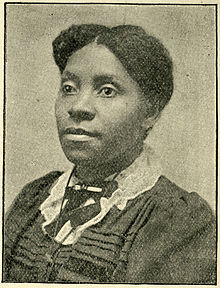
Callie Guy, also known as Callie House, was a groundbreaking African American political activist who advocated for slave reparations in the developing Jim Crow period of the American South. She was born in 1861 into a slaveholding family in Rutherford County. Callie House grew up in a close-knit family that included her mother, sister, and Charlie House, the husband of Callie's sister. She had five children with her husband, William House (perhaps related to her sister's spouse), whom she wed in 1883. House was able to provide for her family by accepting the laundry of both black and white customers. Callie House probably relocated her family to south Nashville in the mid-1890s for better job prospects and to be closer to extended relatives.
House was attracted by the different pro-reparations activities in south Nashville, which were publicized in pamphlets distributed among the local African American population. The idea for the National Ex-Slave Mutual Relief, Bounty, and Pension Association originated with House, who in 1894 collaborated with Isaiah Dickerson to establish the group. Dickerson worked as a political activist for William Vaughan, the white editor of the Omaha, Nebraska, Daily Democrat, who advocated for reparations for African Americans as a means of supplying the South with much-needed cash, before he moved to Nashville. Callie House and Isaiah Dickerson, dissatisfied with the paternalistic purpose of Vaughn's organization, toured extensively across the South and border states to rally support for a new group that would give aid and services at the local level while also advocating for national reparations. House and Dickerson established the Ex-Slave Pension Association in 1898, and it was formally recognized by Tennessee law that year. Unlike most other charities, this one served people throughout the country regardless of their race, religion, or socioeconomic status.
Since the Freedman's Bureau had been disbanded, local branches of the National Ex-Slave Mutual Relief, Bounty, and Pension Association had developed in every African American community. Local chapters were founded via the work of Callie House and other organizing agents and are supported by monthly dues, which are used to pay for things like funeral costs and medical care for members. The Ex-Slave Pension Association stood out from other such groups because of its national structure and objectives, in addition to its local focus.
The Ex-Slave Pension Association organized national conferences, elected national leaders, and lobbied Congress for legislation to provide compensation to former slaves. Repair lobbyists and regional chapter organizers were also given trip funds by the national group. Additionally, it communicated with regional groups, who reacted by contributing to a national fund to lobby for a reparation law that would compensate former slaves financially for their work in the antebellum American South.
African American community leaders and government authorities both opposed Callie House and her group. This adversarial environment was aided by the implementation of segregation laws across the South. Booker T. Washington and W. E. B. Du Bois, two prominent African-American leaders, paid little attention to the reparations movement, instead concentrating on improving educational opportunities and protecting their rights under a white supremacist society. White southerners were skeptical of the reparations movement and thought that Callie House's attempts to organize African Americans were deceptive. Whites believed that House and Dickerson were trying to scam black people out of their money because they knew Congress would never adopt restitution legislation.
U.S. Pensions Bureau, which oversaw the distribution of funds to Union veterans, began conducting covert monitoring of Callie House and the organization after receiving anonymous complaints from white community members. Through the Comstock Act of 1873 and subsequent amendments, the U.S. Postal Service gained broad authority to reject mail from anyone suspected of engaging in fraudulent activity. Postal officials allegedly suspected Callie House and her group of fraudulently collecting donations in 1899, so they filed a fraud order against them.
House resigned in 1902 as assistant secretary of the Ex-Slave Pension Association due to ongoing antagonism from the federal government. Although she kept organizing chapters throughout the South, the reparations campaign in Congress eventually fizzled out with the 1903 defeat of Alabama Congressman Edmund Petus's reparations legislation. Callie House, concerned that legislation would stall, retained the services of attorney Cornelius Jones to sue the United States Department of the Treasury for $68,073,388.99 in cotton taxes linked to slave labor in Texas. Although the action brought attention to the question of slave reparations, the case was ultimately rejected by the District of Columbia Court of Appeals on the grounds of governmental immunity in 1915.
As early as 1916, A. S. Burleson, the Postmaster General, attempted to have Callie House indicted. Accusing House and other executives of the National Ex-Slave Mutual Relief, Bounty, and Pension Association of defrauding former slaves out of money by issuing false circulars promising pensions and reparations, Nashville District Attorney Lee Douglass filed charges against them on May 10, 1916.
The evidence presented by the district attorney was weak. The brochure in issue did not identify any of the purported fraud's victims and claimed simply that donations would be used to lobby for laws providing slave reparations. The claim that Callie House personally benefited from her work with the organization is further undermined by the fact that she currently lives in the same house in South Nashville to which she relocated from Rutherford County. An all-male, all-white jury found Callie House guilty of mail fraud and sentenced her to a year and one day in prison, despite the fact that the evidence against her was quite poor. From November 1917 to August 1, 1918, she was incarcerated in the Jefferson City, Missouri prison, where she was eventually released for good conduct on August 1, 1918. After serving her time, she went back to work as a laundress in south Nashville.
Although the national branch of House's group disbanded after facing criminal charges, House's work to win restitution and help for African Americans was carried on by various people and organizations throughout the twentieth century. Within the context of white supremacist society, Callie House's grassroots organizing anticipated the success of other African American organizations and people, making her a trailblazer in the African American community. On June 6, 1928, Callie House passed away, and she was laid to rest in an unmarked tomb in Nashville's historic Mt. Ararat Cemetery.


Comments