
Memorial day for the American Activists: Let us not forget those Freedom Fighters who fought the internal war in America, against herself.
- Sadiki Dhatnubia
- May 27, 2024
- 5 min read

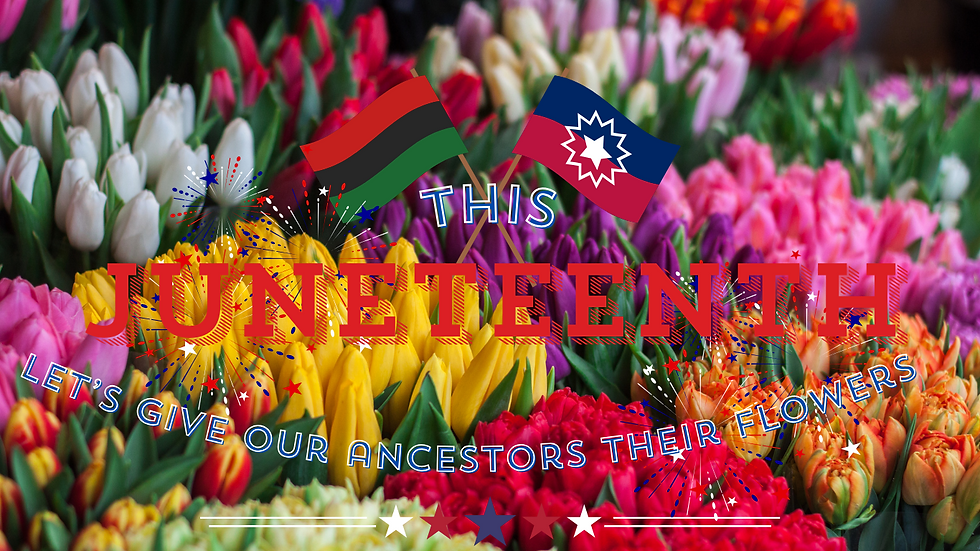
our Memorial Day honors the brave American activists who have battled and died for the freedom and justice of Black people in addition to the black soldiers who have bravely served our nation from the Civil War forward. As we go into Juneteenth, a day honoring the end of slavery in the United States, their sacrifices really speak to us. We honour some well-known campaigners who lost their lives for equality here.
Crispus Attucks (1723–1775)
Often cited as the first American Revolutionary casualty is Crispus Attucks. In resisting British rule, he was slain in the Boston Massacre on March 5, 1770. African and Native American by birth, Attucks came to represent the struggle for justice and freedom in America forever.
Denmark Vesey (1767–1822)
In Charleston, South Carolina, in 1822, previously enslaved man Vesey organized a massive slave rebellion. Trapped and put to death before the uprising could begin, Vesey was betrayed. The terrible end of his life and his audacious protest against slavery highlight the unwavering fight for liberation by African Americans.
Harriet Tubman (1822–1913)
Harriet Tubman did not perish in direct action, but her job as an Underground Railroad conductor—guiding oppressed individuals to freedom—placed her life in continual danger. Throughout the Civil War, Tubman also risked her life to save others as a spy and nurse. Her unfailing dedication to equality and freedom has made her an enduring emblem of resistance.
Dr. Martin Luther King Jr. (1929–1968)
Among the most well-known figures in the Civil Rights Movement, Martin Luther King Jr. promoted peaceful opposition to injustice and racial segregation. Targeted were his leadership roles in the Montgomery Bus Boycott and the March on Washington. Though King was killed in Memphis, Tennessee, on April 4, 1968, his vision of justice and equality endures.
Medgar Evers (1925–1963)
Veteran of World War II Medgar Evers served as the NAACP field secretary and put forth great effort to advance civil rights in Mississippi. He was involved in several instances to guarantee black Americans' voting rights and to remove segregation. June 12, 1963, saw Evers murdered outside his Jackson, Mississippi, home. The Civil Rights Movement was spurred on by his death, which made clear how urgently reform was needed.
Fred Hampton (1948–1969)
Charming and well-known for his work to stop police brutality and start community projects, Fred Hampton was the deputy chairman of the Black Panther Party. In an FBI and Chicago police operation on December 4, 1969, he was slain. The government's opposition to black empowerment is still poignantly brought home by Hampton's death.
James Chaney (1943–1964)
As part of the Freedom Summer effort to register Black voters in Mississippi, James Chaney worked in civil rights with Michael Schwerner and Andrew Goodman. Ku Klux Klan members kidnapped and killed the three on June 21, 1964. Their killings stunned the country and brought to light the brutal opposition to civil rights initiatives in the South.
Viola Liuzzo (1925–1965)
Although not black herself, Viola Liuzzo was a devoted civil rights warrior whose life was lost in the fight for black freedom. While driving other activists during the 1965 Selma to Montgomery marches, the Ku Klux Klan killed her. Her selflessness is evidence of the wide coalition fighting for civil rights.
Malcolm X (1925–1965)
Malcolm X, real name Malcolm Little, was a prominent member of the Nation of Islam and thereafter a powerful proponent of human rights and black empowerment. His ferocious rants and support of Black self-determination were well-know. Malcolm X was shot on February 21, 1965, at the Audubon Ballroom in New York City, during a lecture.
Reverend George Lee (1903–1955)
Working to register Black voters in Mississippi, Reverend George Lee was an early martyr of the Civil Rights Movement. He was shot dead in his automobile on May 7, 1955, after he defied demands to stop registering voters. His killing brought to light the grave threats that Southerners fighting for voting rights faced.
Vernon Dahmer (1908–1966)
Farmer Vernon Dahmer battled for black voting rights in Mississippi as head of the NAACP branch in Forrest County. The Ku Klux Klan destroyed his house with firebombing on January 10, 1966. Dahmer protected his family, but the next day he died from severe burns. His fearlessness and final selflessness were essential in igniting the civil rights movement.
Harold T. Moore (1905–1951)
Early Florida civil rights campaigners Harry T. Moore and his wife Harriette. The Ku Klux Klan bombed their house on Christmas Eve of 1951, killing Moore. Moore was one of the first well-known civil rights leaders to be assassinated in the early 1950s after he had put up endless effort to fight lynching, segregation, and voting suppression.
Jonathan Daniels (1939–1965)
Deeply engaged in the fight for black civil rights was white seminary student Jonathan Daniels. August 20, 1965, found Daniels shot and murdered by a deputy sheriff in Lowndes County, Alabama, while defending fellow activist Ruby Sales. His death is regarded as a very courageous and unselfish deed.
Lamar Smith (1892–1955)
August 13, 1955, saw the open murder of World War I veteran and voting rights activist Lamar Smith on the courthouse yard in Brookhaven, Mississippi. Nobody was charged with his murder in spite of several witnesses, underscoring the dangerous conditions that civil rights activists in the South faced at the time.
Samuel Leamon Younge Jr. (1944–1966)
Civil rights activist Samuel Younge Jr. attended Tuskegee Institute. He was slain on January 3, 1966, while trying to use an Alabaman gas station lavatory reserved for whites only. The daily risks that those opposing racial injustice and segregation endure were brought home by his death.
Jimmie Lee Jackson (1938–1965)
Jimmie Lee Jackson was an Alabaman civil rights activist and deacon in Marion. In the course of a nonviolent demonstration on February 18, 1965, state police shot and beat him. The Selma to Montgomery marches, which followed his death, were essential in bringing the Voting Rights Act of 1965 into being.
Darren Seals (1987-2016)
Darren Seals was a prominent activist in Ferguson, Missouri, who became known for his activism following the shooting of Michael Brown in 2014. Seals was deeply involved in the protests and was a vocal critic of police brutality and systemic racism. Tragically, on September 6, 2016, Seals was found dead in a burning car, having been shot before the car was set on fire. His murder remains unsolved, and his death highlighted the ongoing dangers faced by activists fighting for racial justice.
George Floyd (1973-2020)
The May 25, 2020, killing of George Floyd by police set up a worldwide campaign against police brutality and racial inequality. While not a typical activist, his killing served as a potent symbol of the continuing battle for black lives, sparking broad activity and demands for institutional change.
As we pay tribute to these people, we also consider the larger background of resistance and the continuous struggle for justice. We are reminded by their legacies and the legacies of countless others that the fight for equality and freedom is far from ended and that we must carry on their work.
Let us celebrate and remember the Black American activists who gave their lives for humanity on this Memorial Day. Their efforts made the progress we see now possible, and their legacies motivate us to keep working toward a society that is more fair and just. May we dedicate ourselves to the continuous fight for real emancipation and equality for everyone as we also commemorate Juneteenth.
For Juneteenth flags and more, click on the link! https://www.afterfebruary.co/shop


Comments